Section 1
Why International Shipping Needs More Than a Sleeve
A card that would survive a short domestic trip can arrive overseas bent, damp or crushed, because an international parcel is handled more times, travels further and passes through sorting systems and climates you cannot control. Longer transit also means more chances for a package to be dropped, stacked under heavier freight or left on a humid loading dock. The goal is a package that protects the card through all of that without inviting rough handling or a customs hold.
This guide covers the packaging method and the international specifics that domestic guides skip: customs declarations, insurance, tracking and the trade-offs between couriers and postal services. It is about getting cards safely from one country to another, not about repairing them. If a card already needs work, keep that a separate decision and handle the shipping properly first.
None of this requires specialist equipment or a big budget. The materials are the same inexpensive sleeves, loaders, cardboard and mailers most collectors already keep on hand, used with a little more care and one or two extra layers. Doing it properly costs a few extra minutes of care; doing it badly can cost a card you cannot get back.
Section 2
Build the Package From the Card Out
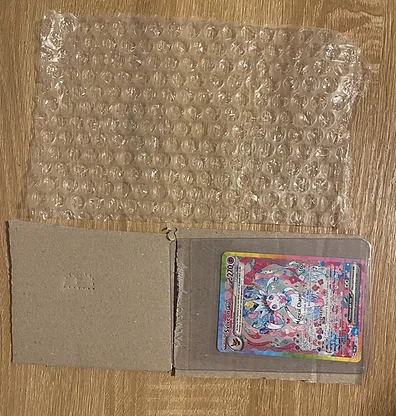
The core method is the same one we ask collectors to use when they send cards to us, and it works just as well for international post. Carefully sleeve the card and place it in a semi-rigid loader so the corners and edges are supported. Place the loaded card between two pieces of cardboard and wrap that in bubblewrap, which stops the card flexing and cushions it against knocks. The sleeve protects the printed surface from handling and scuffs, the semi-rigid stops bending, and the cardboard and bubblewrap absorb the impacts a parcel takes in transit. A sleeve is not a moisture barrier, so waterproof internal protection around the inner bundle is its own layer, covered below.
Immobilise the protected card inside a rigid outer mailer or a small sturdy box so nothing shifts around. A card that can slide has room to build momentum and jam a corner, so use enough packing that the contents do not move when you shake the parcel gently. Avoid taping directly onto sleeves or loaders, and never let tape touch the card itself. Our step-by-step packaging page walks through the same sequence with photos if you want a visual reference before you post.
If you are sending more than one card, protect each card in its own sleeve and loader before you bundle them, and separate the bundles so they cannot grind against each other. A stack of loose loaders behaves like a deck of cards in transit, sliding and fanning until corners catch. Secure each protected card, then pack the group as a single snug unit inside the outer mailer so the whole lot moves as one.
Section 3
Make the Outer Layer Rigid, Snug and Waterproof
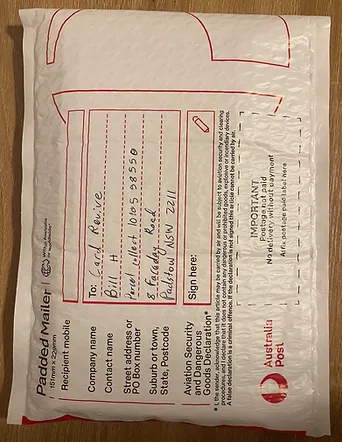
The outer layer has three jobs: stay rigid so the parcel cannot be folded, stay snug so the contents cannot rattle, and keep water out. A rigid cardboard mailer or a small box resists the bending that flat envelopes invite in automated sorting. International journeys can pass through humid air freight and rain-exposed handling, so a plastic sleeve or a wrap of poly around the inner package is cheap insurance against condensation and wet weather.
Seal every seam with strong packing tape rather than relying on a self-adhesive flap that can peel in transit. Keep the parcel compact and reasonably flat where the card sits, because oversized boxes tempt handlers to stack heavier items on top. A tidy, obviously well-made package also signals to everyone who touches it that there is something worth handling carefully inside, without advertising exactly what that is.
Section 4
Customs Declarations: Accurate and Honest
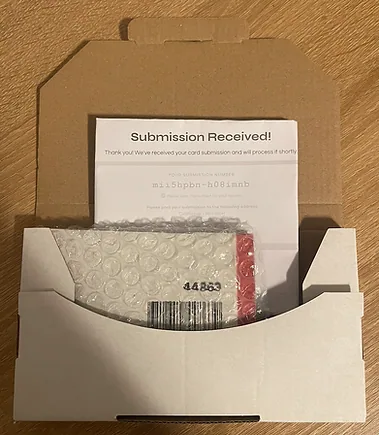
Parcels sent overseas from Australia are typically lodged with a customs declaration describing the contents and their value, and the safest approach is to make both accurate. Undervaluing a shipment to reduce duties or fees is a false declaration, and vague or misleading content labels can trigger inspection, so describe the contents in plain terms such as collectible trading cards. Keep the customs value and any carrier compensation separate in your mind: declaring a value does not itself insure the card, and what a carrier pays on a claim is governed by that service's own terms.
Complete the paperwork the carrier requires and keep your own copy, along with proof of the item's value such as a receipt or a recent sale of a comparable card. Rules, thresholds and paperwork differ by carrier, service and destination country and change over time, so check the current requirements for the service you are using and the country you are sending to before you lodge the parcel rather than assuming your last shipment's rules still apply. Accurate declarations move faster through customs and protect you if something goes wrong.
Fill in the recipient's details exactly as the destination country expects, including any tax or import reference the buyer gives you, because a missing field is a common reason parcels sit in customs longer than they should. If you are shipping a sold card, agree with the buyer in advance who is responsible for any import duties or taxes on arrival, so a surprise charge does not turn a smooth sale into a dispute.
Section 5
Insurance, Tracking and Signature on Delivery
For anything of value, choose a service that includes tracking, and consider the carrier's optional transit cover with a clear view of what it actually is. Carrier cover, such as Australia Post's Extra Cover where it is offered for a service, is conditional compensation rather than agreed-value insurance: it is subject to the carrier's terms, excluded-item rules and proof-of-value requirements, and the amount you select is a claim limit, not a guaranteed payment. Read what your chosen service covers for trading cards before relying on it, and remember that tracking gives both you and the recipient a record if a claim is ever needed. Signature on delivery is worth adding for higher-value cards, so the parcel is handed to a person rather than left unattended.
Before you post, photograph the card and the finished package as evidence of what you sent and how well it was protected. Keep the receipt, the tracking number and any cover details together until the parcel is confirmed delivered and the recipient has checked the contents. If a claim is ever needed, that small folder of evidence is the difference between a quick resolution and a drawn-out dispute.
It is also worth confirming the recipient can actually receive a signed-for parcel, because a missed delivery that sits at a depot in another country adds days of exposure and handling. A quick message to check the address and that someone will be available to sign removes one of the most avoidable causes of delay and loss.
Section 6
Courier Versus Postal: Weighing the Trade-offs
International shipping usually comes down to a choice between a postal service and a commercial courier, and each has a place. Postal services are often the more economical option and reach a wide range of destinations, which suits lower-value cards where the cost of shipping should not dwarf the card. Their handling and tracking depth can vary between countries, so read what a given service actually includes rather than assuming.
Commercial couriers are the alternative, usually at a higher price. Whether that price buys more protection depends on the specific service rather than the category, so compare what each option actually provides for your destination instead of assuming a courier is automatically the safer choice. Match the service to the card: an inexpensive common does not need premium handling, and a high-value chase card should not travel on the cheapest untracked option available.
Whichever you choose, look past the headline price to what the service actually includes: the compensation limit and its conditions if the parcel is lost, whether tracking updates continue once the parcel leaves your country, and how a claim is filed if it comes to that. Two services at similar prices can offer very different protection, and for a card you cannot replace, that fine print matters more than a few dollars of postage.
Section 7
Common Mistakes That Wreck Cards in Transit
The most common failure is a card that can move inside its packaging, because loose contents shift, gather momentum and damage corners over a long journey. The opposite mistake also happens: wrapping so tightly that tape or a squeezed loader pinches the corners before the parcel even leaves. Aim for snug support without compression, and never let tape make contact with the card.
The other frequent errors are skipping waterproofing on a journey that can pass through rain and humidity, using a flimsy envelope that folds in automated sorting, and rushing the customs form. A vague or undervalued declaration can stall a parcel in customs and complicate any compensation claim that depends on proof of value. Take the extra few minutes on the outer layer and the paperwork, and the card is far more likely to arrive in the condition it left.
Section 8
Before You Post: A Quick Recap
Sleeve the card, add a semi-rigid loader, sandwich it between cardboard, wrap it in bubblewrap and immobilise it inside a rigid, waterproofed outer mailer. Declare the contents accurately, weigh up the carrier's optional cover with its conditions and limits in mind, choose a tracked service, add signature on delivery for higher-value cards, and photograph everything before it goes. Match courier or postal to the value of the card rather than habit.
Do those things and international shipping becomes a routine step rather than a gamble. For the full step-by-step method with photographs, our packaging guide walks through the same sequence we ask collectors to use when they send cards to the Lab.